
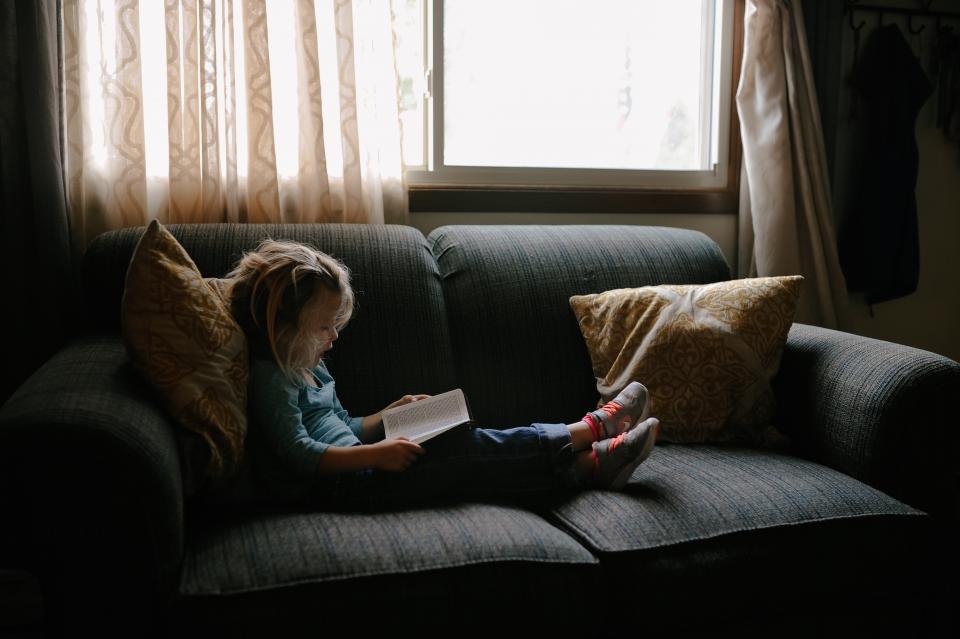
Beginner books come in two types that teach reading in very different ways. Here is a practical comparison to help you match books to your child’s stage.
Quick takeaways
- Decodable readers let children sound out words using letter-sound patterns they have already been taught, building accuracy and fluency.
- Leveled readers rely on predictable text, pictures, and context cues, an approach research links to guessing rather than true decoding.
- A book is only decodable for a child who has learned the patterns in it, so match any set’s skill sequence to your phonics lessons.
- Public libraries often carry decodable collections and book lists organized by skill, so borrow before buying boxed sets.
- Decodable readers serve a short practice window, while read-alouds of rich books build vocabulary and comprehension.
If your child is starting to read, you have probably noticed two kinds of beginner books on library shelves and curriculum lists: decodable readers and leveled readers. They look similar at first glance, small books with short sentences and plenty of pictures, but they teach reading in very different ways. Understanding the difference helps you match books to what your child is actually learning, rather than guessing from the cover.
What Decodable Readers Are (and What They Look Like)
Decodable readers are short books written so a child can sound out nearly every word using letter-sound patterns that have already been taught. The idea is simple: if your child has learned the most common sounds for a handful of letters, the words in the book use mostly those sounds. Reading becomes an act of blending, not guessing.
“Decodable” is really a match between the book and the child. A text counts as decodable for a child who has been taught the phonics patterns and common irregular words in it. If the book contains a pattern your child has not learned yet, such as the “ai” spelling in a word like “grain,” that word turns into a guess. For that reason, well-designed decodable sets follow a scope and sequence, introducing patterns in a deliberate order and building from simple to complex.
Most decodable readers share a few visible traits: short sentences built from taught patterns, a small number of high-frequency words such as “the” and “to,” and illustrations that support the story without giving the words away. Our glossary of reading instruction terms defines the phonics vocabulary you will run into while choosing these books.
What Leveled Readers Are (and How They Are Graded)
Leveled readers are sorted into difficulty levels, often marked with letters or numbers, based on how readable a book seems: sentence length, word repetition, and overall complexity. Many of these books use predictable, repeated sentence patterns, such as the same phrase on every page with one word changing, and lean on illustrations to carry meaning.
The teaching method often paired with leveled readers encourages children to figure out words using clues from the meaning of the story, clues from how a sentence is built, and clues from the letters themselves, especially the first letter. The trouble, according to reading research, is that working words out this way tends to be what struggling readers do, not what skilled readers do, because it does not build the skill of decoding. Studies have also found that the levels themselves are not a reliable predictor of whether a child will struggle with a given book, since difficulty is often assigned somewhat arbitrarily.
How Each Type Builds Reading Skills
The two book types exercise different muscles. Decodable readers build word recognition. When a child reads connected text matched to a newly taught skill again and again, segmenting and blending sounds becomes faster and more automatic. That automaticity matters because it frees mental effort for comprehension. A child who is no longer sounding out every word has attention to spare for what the story means.
Leveled readers, by contrast, do not systematically build decoding skills. A child can move up levels by memorizing the sentence pattern and checking the picture, which can look like progress while the underlying skill stalls. Reading researchers point to the Simple View of Reading, which holds that strong comprehension requires both decoding skill and language comprehension. Decodable books develop the word recognition side, while rich books read aloud to your child build vocabulary, background knowledge, and the comprehension side.
One timing note worth knowing: decodable readers are meant for a short window, the period when a child is learning to sound out words. They are practice tools, not the end goal.
Side by Side: Which Fits Your Child’s Stage
| Feature | Decodable Readers | Leveled Readers |
|---|---|---|
| Main purpose | Practice specific letter-sound patterns that have been taught | Build fluency with predictable, repetitive text |
| How words are read | By sounding out and blending | Often by predicting from context, sentence structure, and pictures |
| How difficulty is set | By the phonics sequence, matched to what your child knows | By an assigned level based on perceived readability |
| Best stage | Brand-new and early readers, plus any reader still working on sounding out | Readers who already decode and are working on comprehension |
| A good sign | Your child can read most words without help from the picture | The pictures add meaning without replacing the words |
If your child is just connecting letters to sounds, decodable readers matched to the phonics you are teaching will do more work per minute. Our timeline for learning to read at home shows how these stages typically unfold. If your child already decodes comfortably and is building comprehension and stamina, easier chapter-style books have a place alongside plenty of read-alouds.
What They Cost and Where to Find Free Versions
Decodable readers are usually sold in boxed sets or series that progress through phonics skills, and prices vary depending on how many books a set contains and how it is printed. Before spending, check your public library. Many libraries keep decodable collections and publish book lists organized by skill, and children’s librarians can usually point you to series that build skills in sequence.
Leveled readers are also common at libraries, often shelved as beginning readers by stage, such as phonics readers for brand-new readers, emergent readers, early readers, and transitional readers. For more no-cost options beyond books, see our roundup of free learning resources.
Questions to Ask Before You Buy
- Does the set’s sequence match the phonics my child is learning? A set marketed as decodable will not actually be decodable for your child if its order of patterns does not match what has been taught.
- Which patterns does each book practice, and has my child learned them yet?
- Could my child read this book without the pictures? If the pictures are doing the work, the book teaches guessing, not decoding.
- How does the seller assign levels, and what skill does each level actually require?
- Is this a practice tool or the main reading diet? Decodable books are for a short window, not forever.
Helpful tip
Before you buy any set labeled decodable, list the phonics patterns and high-frequency words your child has already been taught, then check the set’s skill sequence against that list. A mismatch means the books will not give your child the independent practice you are paying for.
Using Both Without Confusing Your Child
You do not have to pick one camp and abandon the other. Keep the purposes separate. Use decodable readers for independent practice tied to phonics lessons, and use picture books and read-alouds, which can sit well above your child’s own reading level, to build vocabulary and knowledge together. If you do use leveled books, watch for guessing: when your child stares at the picture and substitutes a word, gently prompt them to look at the letters and sound it out.
One caution from the research: keeping a struggling reader confined to only low-level books can actually slow literacy growth. If your child keeps guessing despite plenty of phonics practice, or reading stays effortful well past the beginning stage, ask a teacher or a qualified professional whether an evaluation would help. Our article on what a dyslexia evaluation costs walks through the process and what to expect.
This week, borrow a few decodable books matched to your child’s current phonics skills from the library, read one together, and watch whether your child sounds out the words or leans on the picture.
Parents and students ask
Can my child read leveled readers and still learn to decode?
Yes, if you watch for guessing. Prompt your child to look at the letters and sound out unknown words instead of relying on pictures or context.
How do I know if a decodable book matches my child’s level?
Check whether the words use phonics patterns your child has already been taught. If your child has to guess at most words, the book is not decodable for them yet.
Are decodable readers only for brand-new readers?
They are mainly for the early stages and for any reader still learning to sound out words. They are meant for a short practice window rather than permanent use.
Do I need to buy a full set right away?
Not necessarily. Many public libraries hold decodable collections and skill-based book lists, so borrowing first shows you which skills your child needs before you spend.
This guide is general information for families. Follow your school’s policies, and talk to your child’s teacher, school counselor or pediatrician about your child’s specific needs.